Formizm
also: Formism · Polish Expressionism
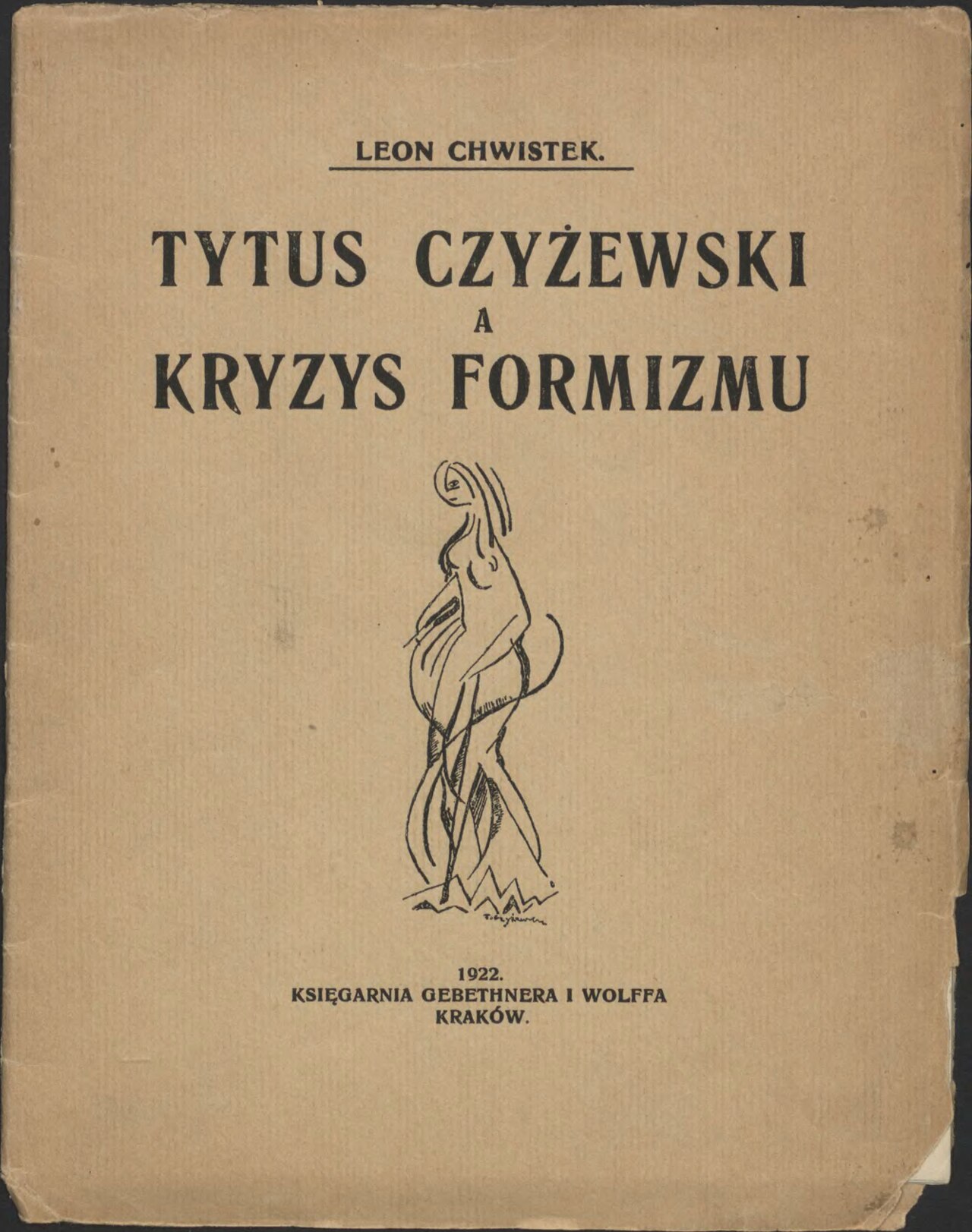
Formizm (Formism) was a Polish avant-garde movement that began in Kraków in 1917, when a group of young artists first exhibited as Polish Expressionists - the name they changed in 1919 to Formiści, signaling their turn to questions of form. Working in the newly independent Poland, they rejected naturalistic imitation and fused the lessons of Western Cubism, Expressionism, and Futurism with motifs from Polish folk art, above all the glass painting of the Podhale region. The circle - Leon Chwistek, Tytus Czyżewski, the brothers Pronaszko, August Zamoyski, Stanisław Ignacy Witkiewicz and others - was active in Kraków, Warsaw, Lwów and Poznań, and from 1919 to 1921 published the periodical Formiści, a hub for exchange with the European avant-garde. The movement ran its course by 1922, but it was one of the first distinctively Polish modern movements.
Defining characteristics
- Cubist fragmentation of space and multiple viewpoints
- Vivid, non-naturalistic Expressionist color
- Motifs drawn from Polish folk art, especially Podhale glass painting
- Distorted, rhythmic figures with dynamic energy
- Flat, decorative patterning set against illusionistic depth
- Deliberate break with academic naturalism
Key figures
- Leon Chwistek (1884-1944) — Painter and philosopher; leading theorist of Formism
- Tytus Czyżewski (1880-1937) — Painter and poet; founding member of the group
- Stanisław Ignacy Witkiewicz (1885-1939) — Painter, theorist and playwright associated with the movement
- August Zamoyski (1893-1970) — Sculptor in the Formist circle
Sources
- Formizm - Wikipedia encyclopedia